Audio & Headphones · Explainer
You bought a decent pair of wired headphones, plugged them into a laptop, and something is off. The sound is there, but it is thin, quiet and flat, as if the music is being played through a wall. You search for the fix, and the answer that comes back is always the same: you need a DAC and amp.
Sometimes that is true. Often it is not, and the money would be better spent on better headphones. This article is about telling the two cases apart, using two specifications that actually matter and one that is quoted far too often.
The honest answer first
For most people, with most headphones, on most phones and laptops, a portable DAC and amp is unnecessary. Modern laptops, phones and even the small dongle that comes in the box are competent enough to drive the majority of headphones to a comfortable volume with acceptable quality.
A portable DAC and amp earns its place in a narrow set of situations, and it is worth being specific about which. If none of them describe you, the honest recommendation is to buy nothing and spend the money elsewhere.
Impedance and sensitivity: the pair that decides everything
Two numbers determine how hard a headphone is to drive, and they only make sense together.
- Impedance, measured in ohms, describes how much the headphone resists the electrical signal. Higher impedance generally means the source must supply more voltage to reach the same volume.
- Sensitivity describes how loud the headphone gets for a given amount of power. A high-sensitivity headphone produces more sound from the same input.
The mistake, repeated endlessly in buying advice, is to treat impedance alone as the measure of difficulty. It is not. A low-impedance headphone with low sensitivity can be harder to drive than a high-impedance headphone with high sensitivity. You need both numbers, and even then the result is a guide rather than a verdict.
| Situation | What it usually means |
|---|---|
| Low impedance, high sensitivity | Easy to drive from almost anything, including a phone dongle |
| High impedance, high sensitivity | Often fine from a laptop, may benefit from more voltage headroom |
| Low impedance, low sensitivity | Frequently the hardest case, and the one people misdiagnose |
| High impedance, low sensitivity | The clearest case for a dedicated amplifier |
Rule of thumb. Do not buy an amplifier because a specification says you might need one. Buy it because your headphones are audibly underpowered on the device you actually use, and you have already ruled out everything else.
When a dongle genuinely helps
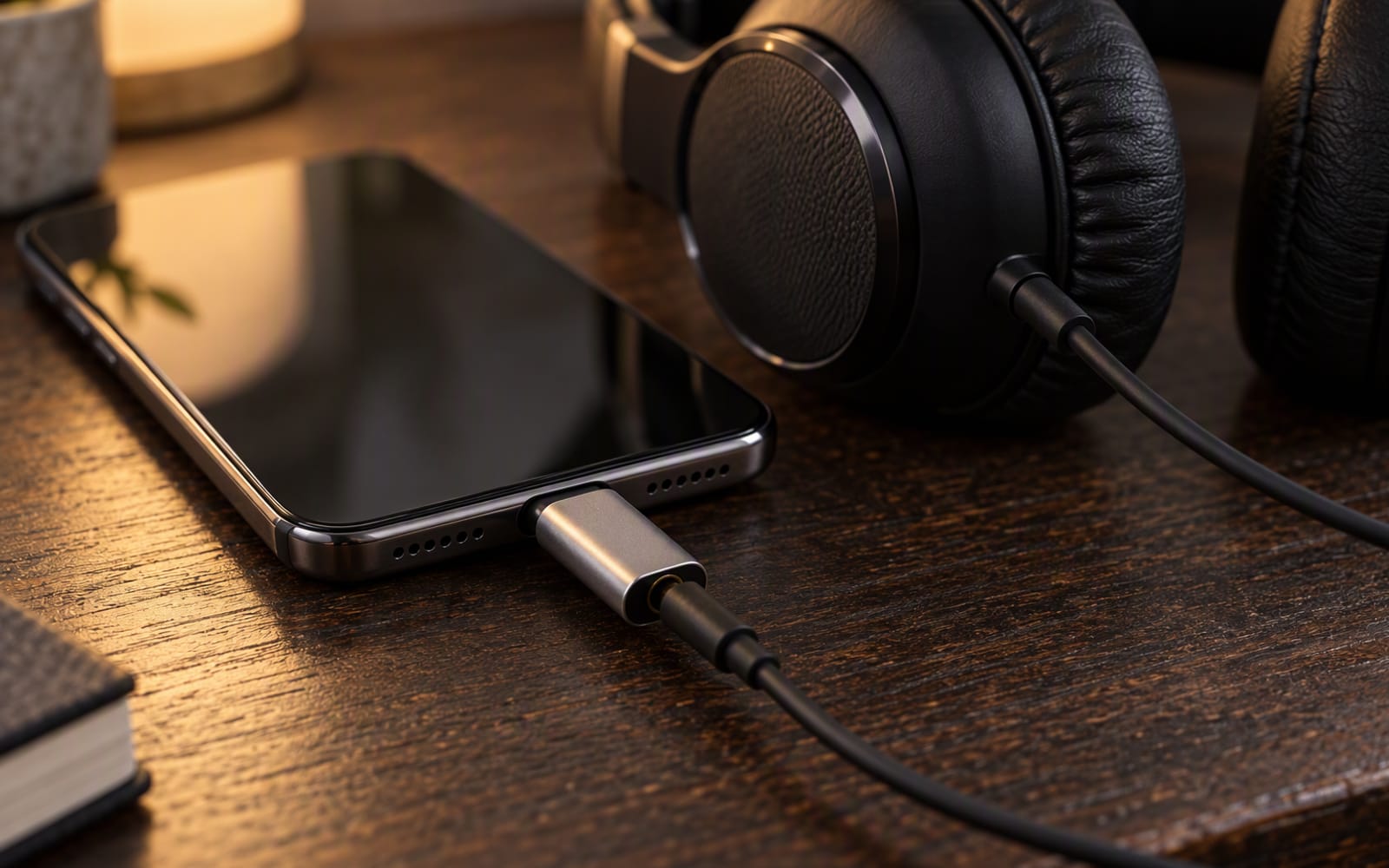
There are a few situations where a portable DAC and amp like the FiiO KA13, based on published specifications, does something real:
- Your headphones are genuinely hard to drive. High-impedance studio models, or low-sensitivity designs, may not reach a satisfying volume from a laptop jack, and a dongle with more output voltage fixes that directly.
- Your laptop’s headphone jack is noisy. Some laptops have audible hiss or electrical interference on the headphone output. A USB-C dongle bypasses that internal path entirely, which can remove the problem regardless of power.
- You want a balanced output. The KA13 offers a balanced connection alongside the standard 3.5 mm output, which can help with demanding headphones. This is a genuine feature at its level rather than a marketing extra.
- You move between devices. A dongle gives you one consistent sound path whether you plug into a laptop, a tablet or a phone.
When it is wasted money
- You are using easy-to-drive earbuds. If your headphones reach a comfortable volume at half way on a phone, a dongle adds nothing except a cable you will lose.
- You are chasing a “better DAC”. The audible differences between competent DACs are small and easily outweighed by the headphones themselves. Money spent here buys less than money spent on better headphones.
- Your problem is the headphones. If the tuning is not to your taste, no amplifier changes that. It will make the same tuning louder.
- You already listen on a desktop with a decent output. Many desktop motherboards and laptops have perfectly adequate headphone outputs. Adding a dongle there is a solution in search of a problem.
Battery drain and the practical costs
A bus-powered dongle draws its power from the device it is plugged into, which means your phone battery pays for the extra amplification. On a phone, that can be a meaningful reduction in listening time, and it is worth weighing against the benefit.
There is also the friction: another cable, another thing to forget, and another connector to wear out. A dongle that improves the sound by a small margin but gets left at home is worse than the built-in jack you would have used.
The “my headphones sound thin” diagnostic
This is the symptom that sends most people shopping, and it is worth working through before spending anything.
Ask, in order:
- Are they loud enough? If yes, and they still sound thin, an amplifier will not help. That is tuning, not power.
- Is the seal correct? For in-ear models, a poor seal removes bass entirely. Fix the tip before you fix the electronics.
- Is the source the problem? Try a different device. If the headphones sound full elsewhere, the source is the weak link.
- Are they actually hard to drive? Check impedance and sensitivity together, not impedance alone.
- Only then consider a dongle. If the headphones are hard to drive and underpowered on your device, a portable DAC and amp is the right fix.
The Sennheiser HD 560S, based on published specifications, sits at low impedance, which means it can run acceptably from a laptop or a dongle. It does not demand an amplifier, though it benefits from a clean source. The Audio-Technica ATH-M50xBT2 is a closed-back studio model that offers a wired mode, which removes Bluetooth from the chain entirely when you want the lowest-latency, least-compressed path.
Our picks
FiiO KA13 — buy it if your wired headphones are genuinely hard to drive, or if your laptop’s headphone jack hisses. It adds real headroom and a balanced output at a sensible level. Do not buy it for easy-to-drive earbuds on a phone, where it is pointless, and be aware that it drains phone battery faster and needs a cable you will probably lose.
Sennheiser HD 560S — the opposite advice. This is a headphone that, based on published specifications, does not require an amplifier to be worth owning. If you are deciding where to spend a limited budget, spend it here rather than on a dongle for a cheaper headphone.
Audio-Technica ATH-M50xBT2 — for people who want a wired option without giving up wireless convenience. The detachable cable means you can run it straight from a device with no latency when it matters, and its flat tuning means it does not need correcting.
When not to buy anything
Most of the time. If your headphones are loud enough and sound the way they are tuned to sound, a portable DAC and amp will not transform them, and the honest advice is to keep your money.
The upgrade that reliably changes how music sounds is better headphones, not more electronics in front of the ones you already have.
Our picks
These are the models we would shortlist for the scenarios in this article. Each entry shows the published specification highlights, what the product is genuinely good at, and what you give up.
FiiO KA13
FiiO
A dongle that gives wired headphones real power. Worth it if your headphones are hard to drive or your laptop’s headphone jack hisses; a waste of money if you use easy-to-drive earbuds on a phone.
What it does well
- Audibly more headroom with demanding headphones
- Balanced output at a budget price
- Tiny and pocketable
What to accept
- Drains phone battery faster
- Pointless with easy-to-drive earbuds
- Needs a cable you will inevitably lose
Best for: Wired headphone users · Laptop listening · High-impedance headphones
Published specs: USB-C portable DAC and headphone amplifier; 3.5 mm and 4.4 mm balanced outputs; Desktop and portable modes; Bus-powered from the connected device.
Last checked: 2026-09-18
Sennheiser HD 560S
Sennheiser
The cheapest way into genuinely good open-back sound. Open-back means a wide, airy presentation and zero ear fatigue — and also means everyone in the room hears your music, and you hear them.
What it does well
- Wide soundstage that closed-backs cannot match
- Very light and comfortable for hours
- Drives acceptably from a laptop or dongle
What to accept
- Leaks sound in both directions
- No isolation at all — unusable in an office
- Needs a quiet room to be worth it
Best for: Quiet rooms · Long listening sessions · Mixing at a desk
Published specs: Over-ear, open-back, wired only; Detachable cable; Low impedance, so a phone dongle can drive it; Replaceable earpads.
Last checked: 2026-09-18
Audio-Technica ATH-M50xBT2
Audio-Technica
A studio staple with Bluetooth added. The closed-back design keeps sound in and noise out, the cable option means zero latency when you need it, and the sound is deliberately flat rather than flattering.
What it does well
- Honest, uncoloured sound for editing
- Wired mode removes Bluetooth latency entirely
- Very long battery rating
What to accept
- No active noise cancelling
- Bulky for travel
- Clamp force is firm out of the box
Best for: Audio editing · Home studio · Wired and wireless use
Published specs: Over-ear, closed-back, wired and Bluetooth; Detachable cable for latency-free monitoring; Flat, monitor-style tuning; Published battery rating around 50 hours.
Last checked: 2026-09-18
Frequently asked questions
Will a portable DAC and amp improve my sound?
Only if your headphones are genuinely underpowered on the device you use. If they already reach a comfortable volume, an amplifier makes them louder rather than better. Any change in tone you notice is usually the amplifier's character rather than an improvement.
What impedance do I need an amplifier for?
There is no single number, because impedance and sensitivity work together. A high-impedance headphone with high sensitivity can be easy to drive, while a low-impedance, low-sensitivity model can be hard. Judge by whether your headphones sound loud enough and full on your actual device.
Does a portable DAC drain my phone battery?
Yes, because a bus-powered dongle draws its power from the device it is connected to. The extra amplification costs battery life, and on a phone that can be noticeable over a long session. Weigh that against the benefit before carrying one every day.
Is a portable DAC worth it for wireless headphones?
No. A DAC and amp only affects a wired connection, so it does nothing for Bluetooth headphones. If your headphones are wireless-only, the money is better spent on the headphones themselves.
Related

Audio
Best Noise-Cancelling Headphones for Open-Plan Offices
Open-plan offices are the hardest listening environment there is. Here is how to choose noise-cancelling headphones for a shared desk, and which models we would shortlist.
Audio
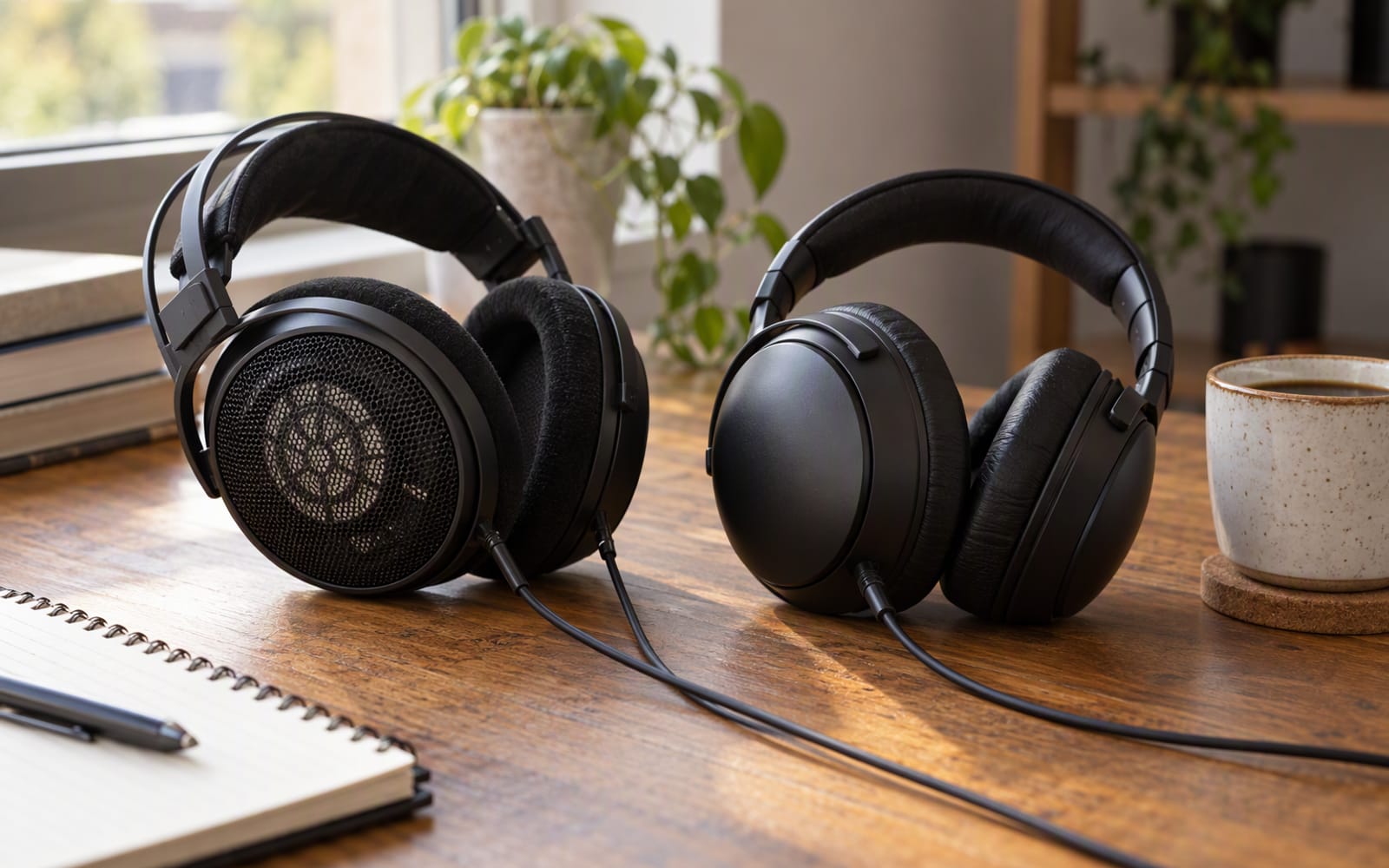
Open-Back vs Closed-Back Headphones: Which Should You Buy?
The single biggest decision in headphone buying is not the brand or the price. It is whether the cups are open or closed. Here is how the choice changes everything.

Audio
Wireless Earbuds for Running: What Actually Stays In Your Ears
Fit and retention decide whether running earbuds survive a 5K, not sound quality. How to choose for your ear shape, sweat, and traffic awareness.