Cameras & Creators · Buying guide
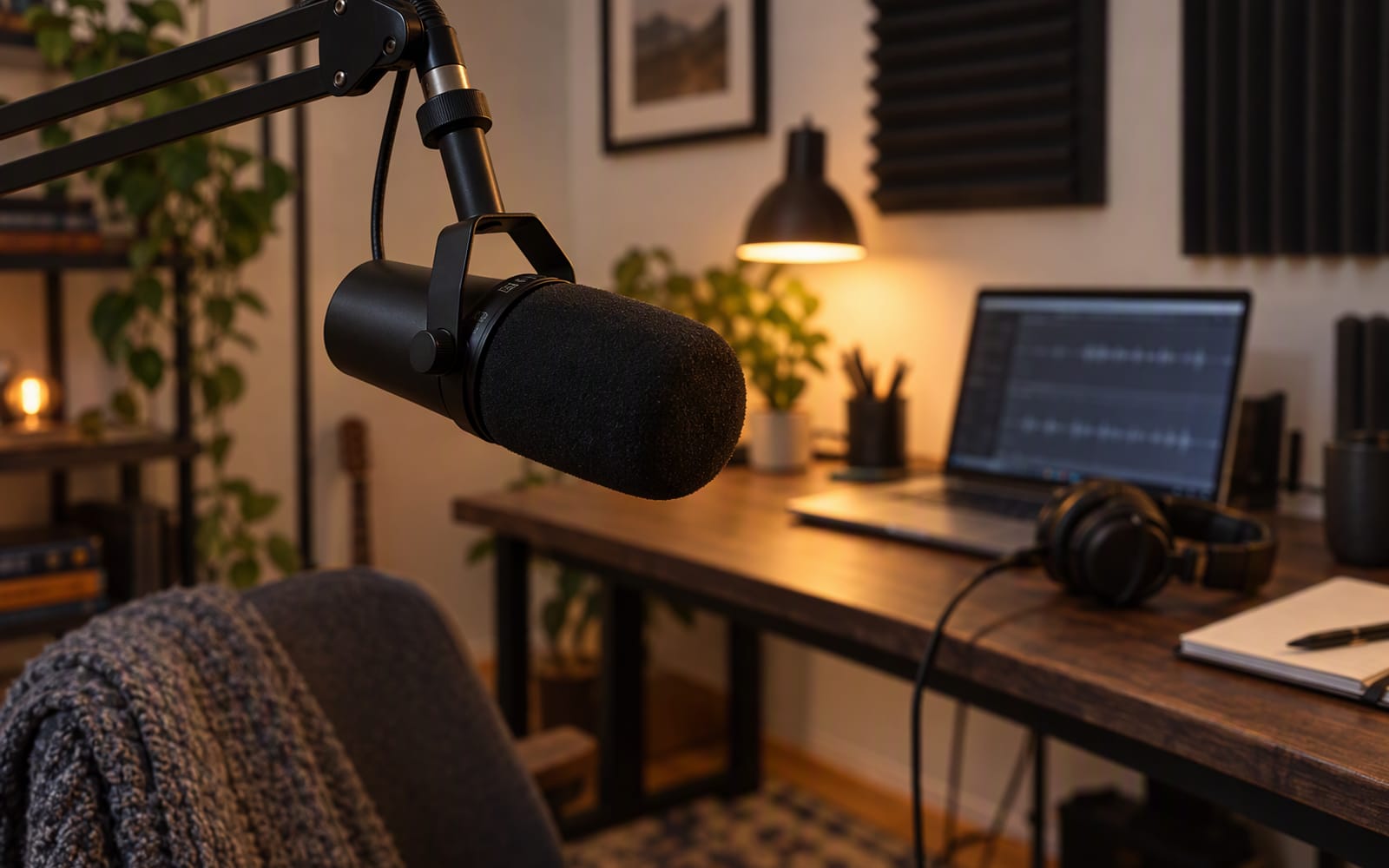
The wardrobe is the studio. There is a duvet pinned over the door, a laptop on a shelf, and a microphone on a desk stand wedged between a shoebox and the wall. It sounds absurd, and it is also a better recording environment than most spare bedrooms, because soft furnishings and a small enclosed space remove the reflections that make a voice sound like it is coming from the bottom of a well.
That single fact should decide your microphone purchase. The room does more to your recording than the capsule does.
Dynamic vs condenser
Condenser microphones are more sensitive. They capture fine detail — breath, lip noise, the texture of a voice — and they generally produce a bright, open sound. They also capture the room. In a treated space that sensitivity is a gift; in an untreated space it is a problem, because the microphone hears your voice bouncing off the walls alongside the voice itself.
Dynamic microphones are less sensitive and usually more directional. You work closer to them, and they reject more of what is behind and beside you. The trade is a little less fine detail, which in a normal room is a trade worth making.
The practical rule: the worse your room, the more a dynamic microphone is the right answer.
Why an untreated room changes the recommendation
Reverberation is the enemy. A room with hard floors, bare walls and a large window reflects sound back at the microphone slightly late, and the result is a hollow, distant quality that no amount of processing fully removes. The microphone is doing its job; the room is doing damage.
The cheapest acoustic treatment is soft material you already own. A rug, curtains, a bookshelf, a bed, a wardrobe full of clothes. Every soft surface absorbs reflections. Recording in a small room with a lot of fabric in it will improve your sound more than moving up a price bracket.
A cheap dynamic microphone in a quiet, soft room will beat an expensive condenser in a reverberant one, every time. Buy the room before you buy the microphone.
USB vs XLR, and growing later
USB microphones plug straight into a computer. The preamp and the analogue-to-digital converter live inside the microphone, so there is no interface to buy and nothing to configure beyond selecting the input. They are the fastest route from a box to a recording.
XLR microphones need an audio interface or a mixer to connect. That is an extra purchase and an extra thing to learn, and it buys you more flexibility: interchangeable preamps, the ability to run several microphones, and a path that scales if you later record with guests in the same room.
If you are unsure, choose a microphone that offers both. Starting on USB and moving to XLR later means you buy the microphone once.
Boom arm or desk stand
A microphone sitting on a desk stand is usually in the wrong place. It is too far from your mouth, which forces you to raise the gain and capture more of the room, and it is coupled directly to the desk, so every keystroke and mouse movement arrives in the recording as a low thump.
A boom arm fixes both problems at once. It holds the microphone close to your mouth without a stand in the way, and it decouples the microphone from the surface you are working on. If your budget is limited, a boom arm is a better second purchase than a more expensive microphone.
Gain staging without a meter
Gain is the amount of amplification applied to the microphone’s signal before it is recorded. Set it too low and you record a quiet track with a high level of background hiss, which cannot be fixed later. Set it too high and loud words clip, which also cannot be fixed later.
The habit that works without any measurement: speak at your normal volume, adjust the gain so ordinary sentences sit comfortably below the maximum, and leave headroom for the moments you get louder. Then keep your distance consistent. A stable distance from the microphone does more for a consistent recording than any setting.
Our picks
Three microphones for three different home setups. Each entry notes the published specification highlights the recommendation rests on, and what you give up.
A note on how we choose. Techowire does not run a test lab. Our recommendations are based on manufacturers’ published specifications compared against the scenario you are reading about, plus a consistent editorial judgement about which trade-offs matter. We do not publish star ratings or claim hands-on measurements. Where a claim is inference rather than a verified fact, the wording says so.
Shure MV7+ — for the untreated room
A dynamic microphone with both USB-C and XLR outputs, which means it grows with you. Based on published specifications its tight pickup pattern rejects room echo far better than a condenser, and that rejection matters more than any other specification if you record in a normal room. Onboard processing handles level and tone shaping, and there is a headphone output for monitoring.
What you give up: it needs a boom arm to sound its best, it is heavier than a typical USB microphone, and its onboard processing is a matter of taste rather than a neutral default.
Elgato Wave:3 — for streaming with a software mixer
A USB condenser with a software mixer that solves a specific problem: balancing game audio, music and your voice in one place. Based on published specifications it includes anti-distortion processing and built-in headphone monitoring, and setup is genuinely plug-and-play.
What you give up: a condenser capsule picks up room noise, so this is the wrong choice for a live room, and its desktop stand transmits keyboard vibration into the recording. In a quiet, soft room it is excellent; in a hard one it will show you the room.
RØDE NT-USB Mini — for the simplest possible setup
A compact USB condenser with almost nothing to configure. Based on published specifications it has a built-in pop filter and a headphone monitoring output, and the magnetic desk stand keeps the setup tidy. If you want to plug in, hit record and not think about it, this is the least fiddly option here.
What you give up: the condenser capsule picks up room noise, there is no onboard processing to shape the sound, and the output is mono.
Comparison table
| Shure MV7+ | Elgato Wave:3 | RØDE NT-USB Mini | |
|---|---|---|---|
| Capsule type | Dynamic | Condenser | Condenser |
| Connections | USB-C and XLR | USB-C | USB-C |
| Suits an untreated room | Yes — rejects room echo | Less well | Less well |
| Onboard processing | Yes | Anti-distortion plus software mixer | None |
| Headphone monitoring | Yes | Yes | Yes |
| Main trade-off | Needs a boom arm; heavier | Picks up room noise | Picks up room noise; mono |
What not to overpay for
- A microphone for a room you have not treated. Fix the space first. It is cheaper and it helps every recording.
- Studio-brand prestige on a bedroom podcast. The capsule does less than the room does.
- A shock mount before a boom arm. The arm solves positioning and isolation together.
- Multiple microphones for a solo show. One good microphone in one good position beats two average ones.
When you should not buy anything
If you already own a USB microphone, the biggest improvement available to you is almost certainly free: move to a smaller room, add soft furnishings, get closer to the microphone, and set your gain with headroom. Do that before spending anything.
Buy a new microphone when you have a specific problem the current one cannot solve — too much room in the recording, no way to grow into XLR, or a setup that is too fiddly to use consistently. If the recording sounds bad because the room is hard, a new microphone will record the room more clearly, not less.
Our picks
These are the models we would shortlist for the scenarios in this article. Each entry shows the published specification highlights, what the product is genuinely good at, and what you give up.
Shure MV7+
Shure
A dynamic microphone with both USB and XLR outputs, which means it grows with you. The tight pickup pattern rejects room echo far better than a condenser, which matters more than any spec if you record in a normal room.
What it does well
- Rejects room echo well in untreated spaces
- USB now, XLR later when you add an interface
- Onboard processing reduces software needs
What to accept
- Needs a boom arm to sound its best
- Heavier than a typical USB mic
- Onboard DSP is a taste decision
Best for: Podcasting · Streaming · Untreated rooms
Published specs: Dynamic microphone with USB-C and XLR outputs; Onboard DSP including auto level and tone shaping; Touch panel for mute and monitoring; Built-in headphone output.
Last checked: 2026-09-28
Elgato Wave:3
Elgato
A condenser USB microphone with a software mixer that solves the classic streaming problem of balancing game audio against your voice. Easy to set up, and more sensitive to room noise than a dynamic mic.
What it does well
- Software mixer handles voice and game audio together
- Simple plug-and-play setup
- Good detail for the price
What to accept
- Condenser capsule picks up room noise
- Needs a quiet room
- Desktop stand transmits keyboard vibrations
Best for: Streaming · Voice-over · Beginner setups
Published specs: USB-C condenser microphone; Clipguard anti-distortion technology; Software mixer for multi-source audio; Built-in headphone monitoring.
Last checked: 2026-09-28
RØDE NT-USB Mini
RØDE
A compact USB condenser with almost nothing to configure. If you want to plug in, hit record and not think about gain staging, this is the least fiddly option here.
What it does well
- Very quick to set up
- Built-in pop filter saves an accessory
- Solid metal build
What to accept
- Condenser capsule picks up room noise
- No onboard processing
- Mono output only
Best for: Podcasting · Voice-over · First setup
Published specs: USB-C condenser microphone; Built-in pop filter; Headphone monitoring output; Magnetic desk stand.
Last checked: 2026-09-28
Frequently asked questions
Dynamic or condenser for a bedroom podcast?
Dynamic, if the room is untreated. A dynamic capsule is less sensitive and usually more directional, so it rejects more of the reflections coming off bare walls and hard floors. A condenser captures more detail, which is a gift in a treated room and a liability in a live one. The worse your room, the stronger the case for dynamic.
Do I need an audio interface?
Only if you choose an XLR microphone. A USB microphone contains its own preamp and converter, so it plugs straight into a computer with nothing in between. XLR gives you more flexibility and better upgrade paths, but it requires an interface to connect at all. If you want to start recording today, USB is the simpler route.
Is a boom arm really necessary?
It matters more than most buyers expect. A desk stand transmits vibration from typing, mouse movement and knocks straight into the recording, and it also positions the microphone too far from your mouth. A boom arm isolates the microphone from the desk and lets you place it close, which reduces how much room you capture.
Should I buy an expensive microphone first?
No. In a quiet, soft room, a modest microphone will outperform an expensive one in a reverberant space, because the room shapes the recording more than the capsule does. Improve the space first — a duvet, a rug, a bookshelf — and only then spend on the microphone.
Related

Cameras
Best Webcams for Working From Home
Lighting, sensor size and privacy matter more than resolution. Here is how to choose a webcam for a spare-room office, and which three models we would shortlist.
Cameras
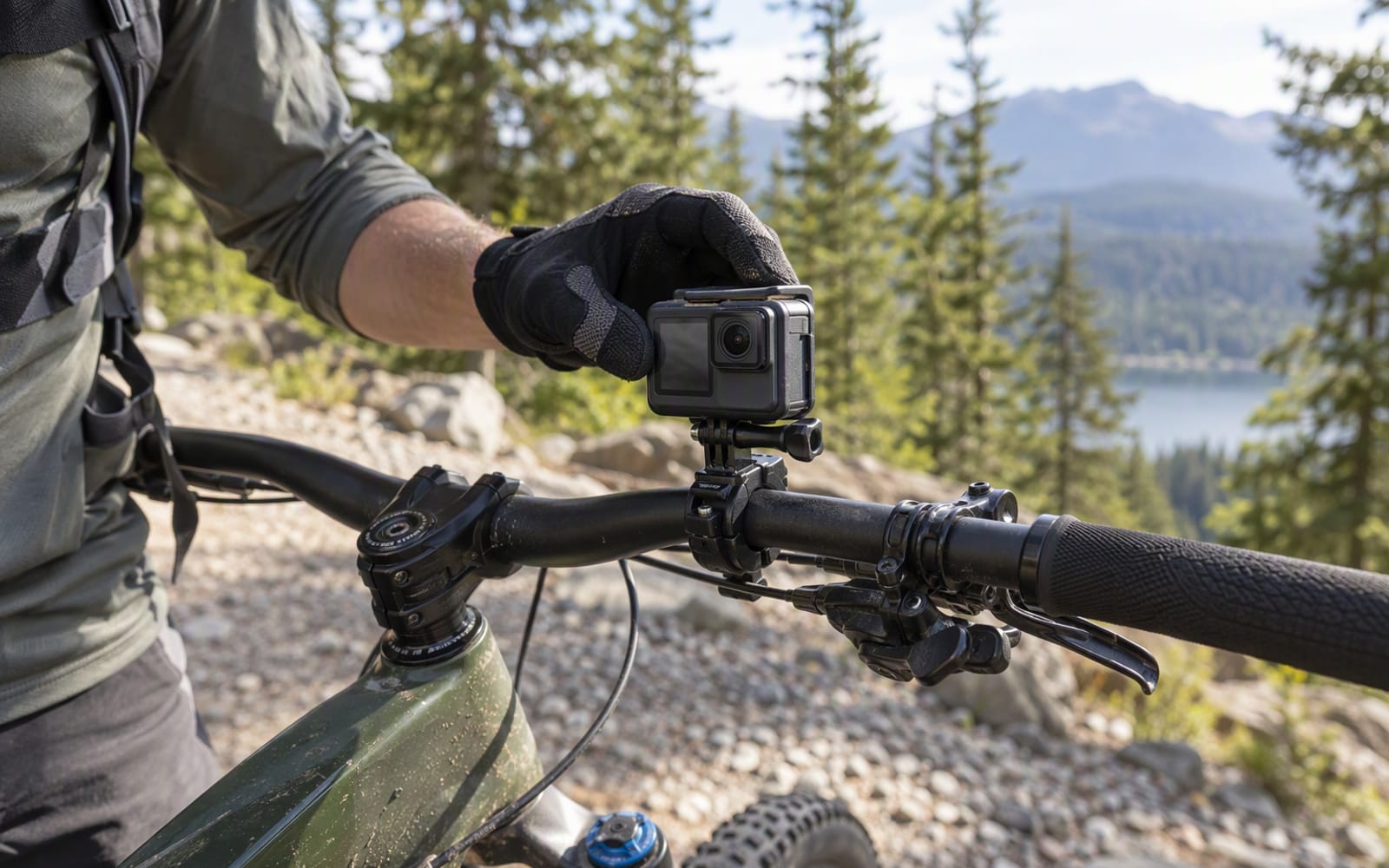
Action Cameras vs Phone Video: Which Do You Need?
Your phone already shoots good video. Here is when an action camera genuinely earns its place, and when the money is better left in your pocket.
Cameras
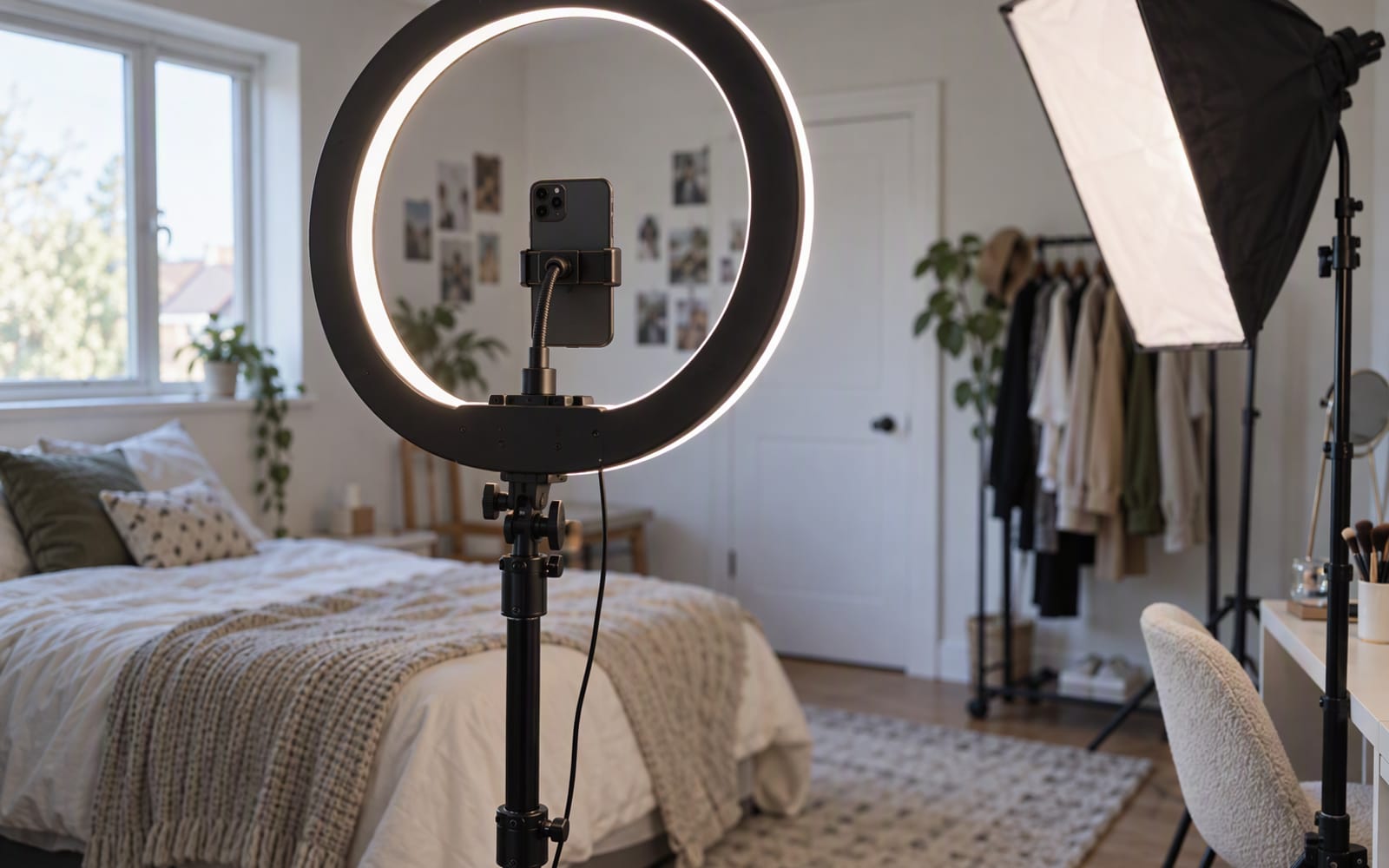
Ring Lights vs Softboxes: A Beginner's Lighting Guide
Ring lights give flat, shadowless light; softboxes let you shape a scene. Here is how to choose your first light, and when a window does the job for free.